Every enterprise that bought an order management system bought it for the same reason. Orders were arriving from too many places, and no single system owned them. Commerce captured them, ERP recorded them, and fulfilment ran somewhere else again. The OMS was meant to sit in the middle and make the order whole. For a long time, it was the closest the enterprise stack ever came to a layer dedicated to execution.
What the OMS was reaching for
That instinct was right. There was a gap between the systems that decided and the systems that recorded, and the order kept falling into it. The order management system was the attempt to fill that gap — a single place to capture, source, track, amend, and return the order across every channel. The ambition was never the problem. The scope was.
An OMS manages the order, and only the order, and only after it already exists. It consumes orders; it does not produce them. By the time an order reaches the hub, the decisions that matter — what was configured, what price applied, which agreement governed, who was even allowed to buy — have already been made upstream, in other systems, under other rules. The OMS inherits those decisions as data. It never owned them. So the single source it promised was always a single source for one object, sitting downstream of where execution actually begins.
The order is one state in the motion
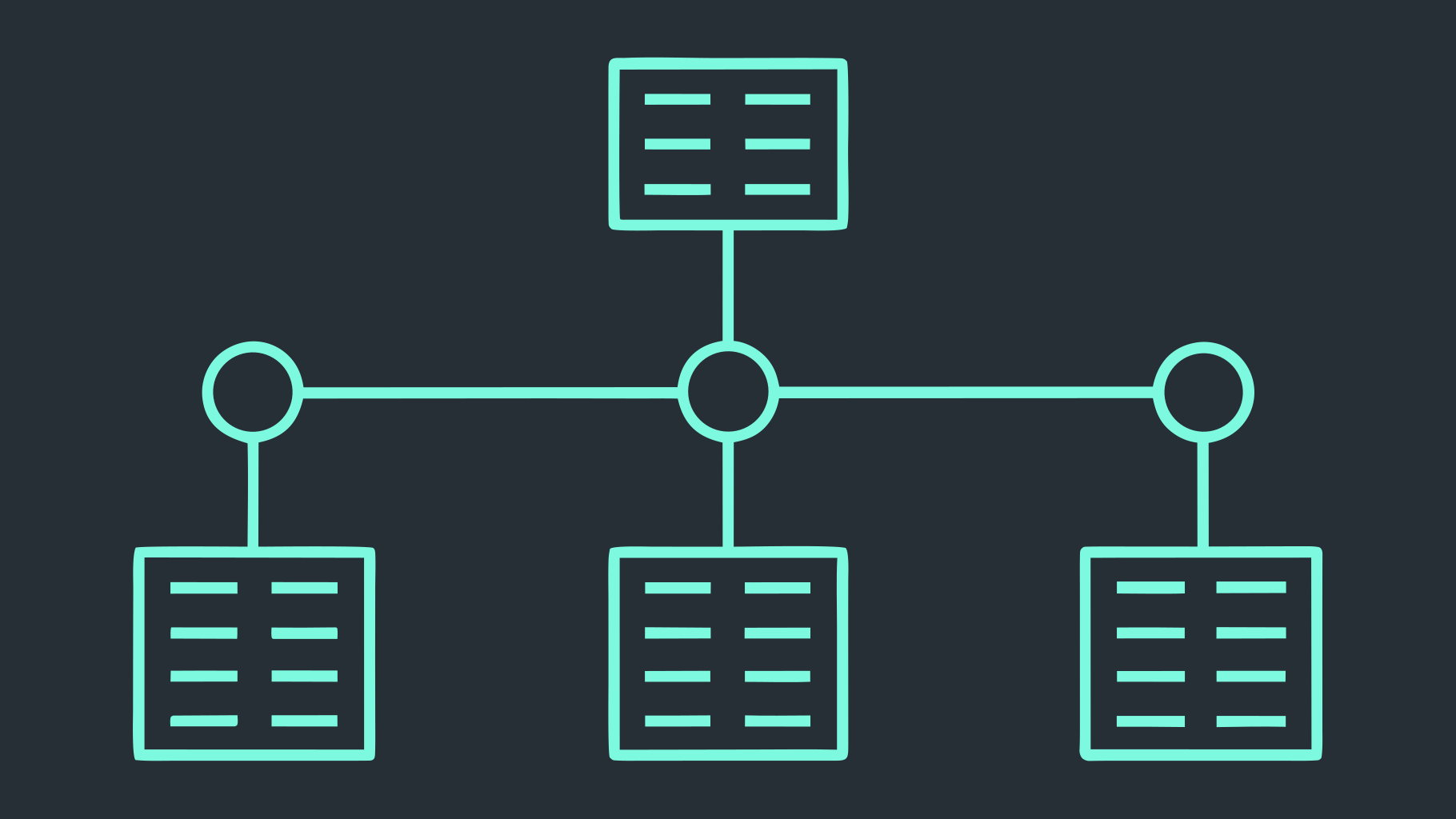
This is the architectural correction, and it changes everything that follows. Revenue Execution does not sit beside the OMS or layer on top of it. It absorbs the order-management function into a governed model that already owns everything upstream of the order — configuration, pricing, agreement, entitlement, approval. The order stops being the system’s organising object and becomes what it actually is: one state in a motion that runs end to end.
When the same model owns the quote and the order, the seam between them disappears. There is no handoff to integrate, no second pricing engine to reconcile, no eligibility check to run twice. The price on the order is the price from the quote, because it was never a different system. The Execution Gap closes — not because another tool was added to span it, but because intent to cash runs as one governed, deterministic motion.
Channels of orders, not channels of execution
An OMS unified channels of orders. It never unified execution. The pricing, the eligibility, the participant rules that should have governed those orders still lived upstream, fragmented, one set per tool, reconciled at the hub after the fact. Revenue Execution holds all of it in one model. Capture, validation, sourcing, fulfilment, change, and return become governed motions that every channel and every participant draw from. The surface changes; the rules do not. The order is governed from the moment it is captured, not reconciled once it arrives.
That is the difference between a single source for the order and a single source for any revenue motion. The order hub could only ever reach the order. The layer reaches the motion that produces it — and every other revenue motion the business runs alongside it, from quoting to renewal to return.
What it means for the rest of the stack
Once the order-management function is modelled as governed motions, a dedicated OMS has nothing left to do that the layer does not already do better. That part is not optional — the function is absorbed. What stays is the customer’s call. A commerce platform can remain as a catalogue and storefront. A point solution can stay where there is real investment behind it. They simply stop being load-bearing for execution; the rules no longer live inside them. ERP, meanwhile, keeps doing the one thing it does best — it records.
This is also where the migration math changes. Order-management logic embedded in ERP, or wired tightly to an OMS, is exactly the entanglement that makes an S/4 programme slow: timelines routed through the ERP itself typically run 3–5× over plan, and more than a decade after release, 61% of SAP ECC customers still have not moved. Externalise the order-management function into the execution layer and that blast radius drops away. The ERP can be upgraded without touching the commercial logic that runs on top of it — the clean core the architecture was supposed to protect.
The single source has to be the motion
For an architect, the question was never which order management system to buy. It was where order behaviour should live. Inside a hub that reconciles orders after other systems shape them, the answer is always another integration and another seam. Inside a governed execution layer, the order is simply one state in a motion that was modelled once and runs everywhere.
An OMS gives you a single source for the order. Revenue Execution gives you a single source for the motion that produces it — every channel, every participant, every order state, governed by one model. The order was never the system. It was always one state inside it.