Outside ERP timelines
Your revenue roadmap stops depending on your ERP roadmap. Model the change on the execution layer and ship it — no release window, no regression across the core.
Intent-to-Execution
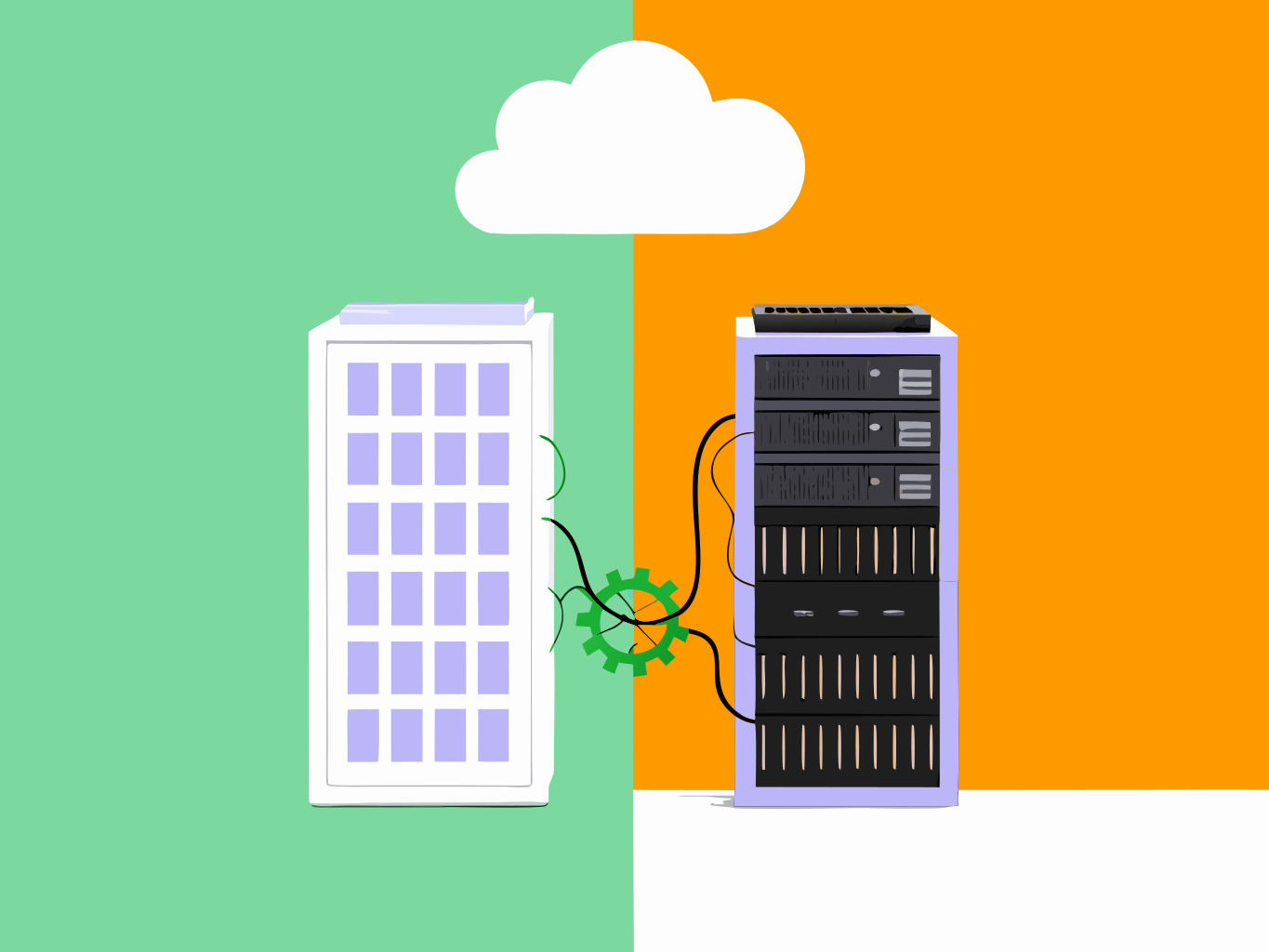
viax sits between your ERPs and your customers and runs any revenue motion in one governed layer, so the business moves at its own speed.
The ERP keeps the record. Revenue execution runs in a layer of its own.
Change ships on the business’s timeline, not ERP windows.
Rules, approvals, and eligibility are explicit, versioned, and auditable.
In practice
See all customer stories →Medical devices · Migration
A Fortune 500 medical device manufacturer transformed order management during its S/4HANA migration.
Multi-ERP enterprise · Commerce
A multi-ERP enterprise escaped its commerce growth tax while supporting mixed-product revenue models.
Healthcare devices · Divestiture
A healthcare device manufacturer extended its legacy ERP investment while modernizing during divestiture.
What the Layer Runs
Your business runs on revenue motions, not software categories. Model revenue motions the way your business actually works and run them end to end.
Any Participant
Fewer manual handoffs, fewer errors, happier customers.
Every participant acts on the same governed model. Dealer Network Quoting: Dealer — requested, Engineer — configured, AI agent — priced, Approver — approved, CSR — quote sent. Contract Renewal: AI agent — flagged, Account manager — proposed, Finance — approved, Customer — accepted, CSR — activated. Distributor Replenishment: Distributor — ordered, AI agent — allocated, Warehouse team — picked, CSR — confirmed, Finance — invoiced.
Request, order and accept in their own portal, against the same rules your team uses.
Validate configurations and pick stock inside the motion, not in a side spreadsheet.
Propose, approve and invoice from one queue, with full context on every step.
Call the same governed steps, bounded by the same policy and logged in the same audit trail.
Modeling a Motion
From a sentence to a governed motion — in days, not release cycles.
The Shift
And upgrading, migrating, or consolidating the ERPs gets easier.
Your revenue roadmap stops depending on your ERP roadmap. Model the change on the execution layer and ship it — no release window, no regression across the core.
A new pricing model, a new channel, a new offer — live when the business decides, not when the systems allow.
Acquired entities run on your pricing, channels, and approvals in one layer, so ERP consolidation stops being the critical path.
No integration tax, no program per change, no RFP per motion. What you keep, you keep because you chose to — not because the architecture needs it.
Together
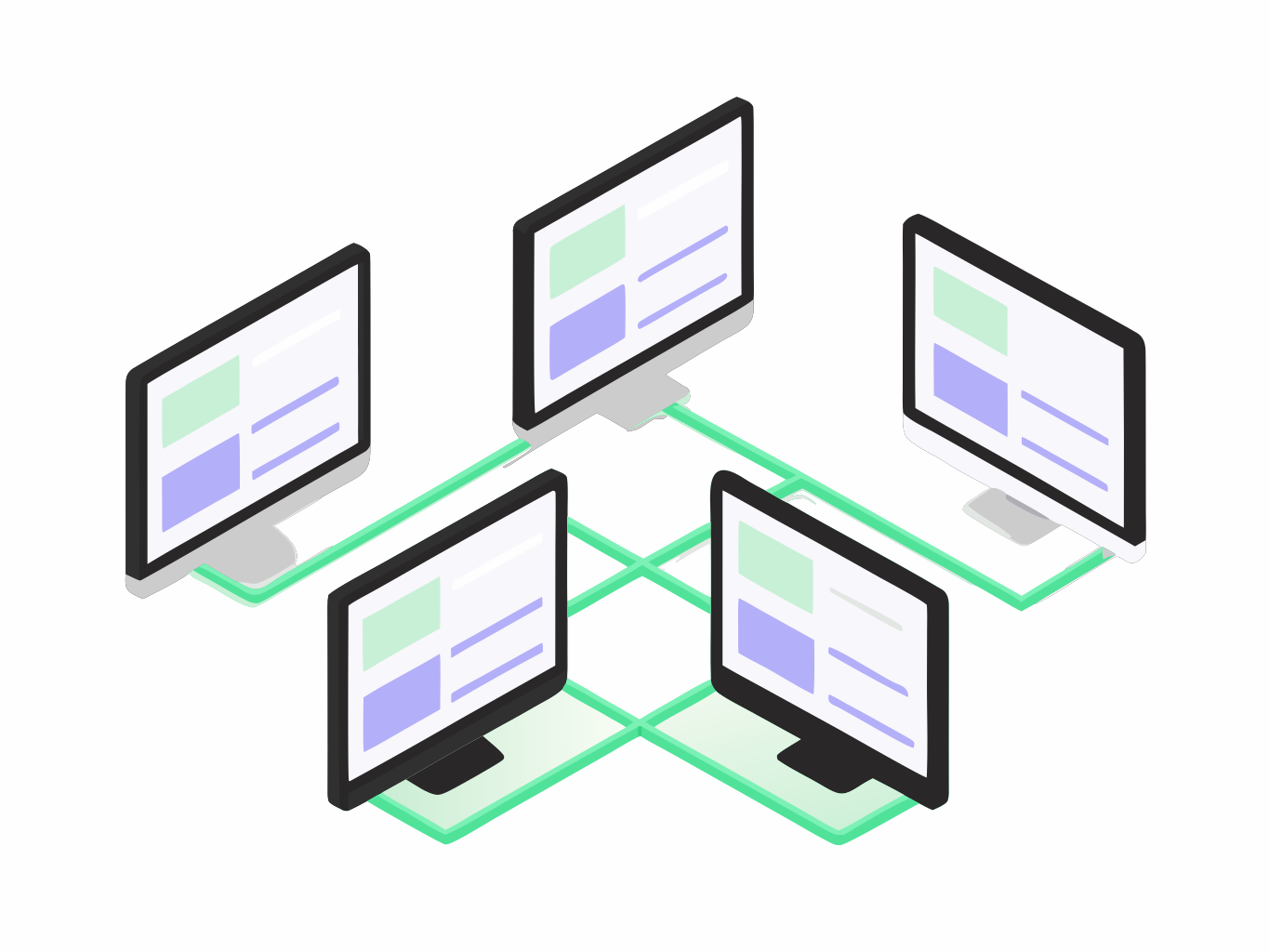
Centralize revenue execution once, and each motion after the first lands on a layer that is already running.
Pricing, approvals, eligibility, and fulfillment rules live in one place outside the ERP, visible, changeable, and auditable.
Quoting, renewals, rebates, onboarding, settlement. Each is modeled on the same layer, not bought as another platform.
The next motion reuses the rules, participants, and AI access the first one built. The roadmap builds itself.
Customer Stories

Get Started
Real execution. Real AI-ready models. Your motion running — without ERP risk, without transformation dollars, without 18 months.