
The commercial team could describe the motion in a paragraph. A product configuration model for a heavy equipment dealer network — regional pricing tiers, fleet approval workflows above $250k, guided selling for complex bundles. The business need was clear. The execution path was not. Translating that paragraph into a running, governed revenue motion meant a specification document, a change request, an architecture review, a development cycle, and a release window. By the time execution caught up to intent, the business had already moved on to the next thing it couldn’t run.
That distance — between what a commercial team can describe and what its systems will actually execute — is the Execution Gap in its most visible form. It is not a process failure. It is an architectural one. And it has a cost that extends beyond the weeks spent waiting: the decisions that never get made because the system cost of making them is too high.
Why intent and execution never spoke the same language
Revenue teams have always known what they needed. The constraint was never imagination — it was translation. Every motion had to move from the language the business spoke, pricing structures, approval thresholds, channel rules, into the language systems required: data models, code paths, integration specifications. That translation required people, time, and a handoff chain that introduced ambiguity at every stage.
The problem compounds architecturally. When a motion is built as code inside ERP or a point solution, the intent that created it becomes invisible to the system. The system knows what to do. It no longer knows why. Governance becomes something applied after the fact. Auditability means reading code rather than reasoning through it. And when the business needs to change the motion — a new pricing tier, a revised approval threshold — the entire translation process restarts from the beginning.
What changes when the motion goes to viax
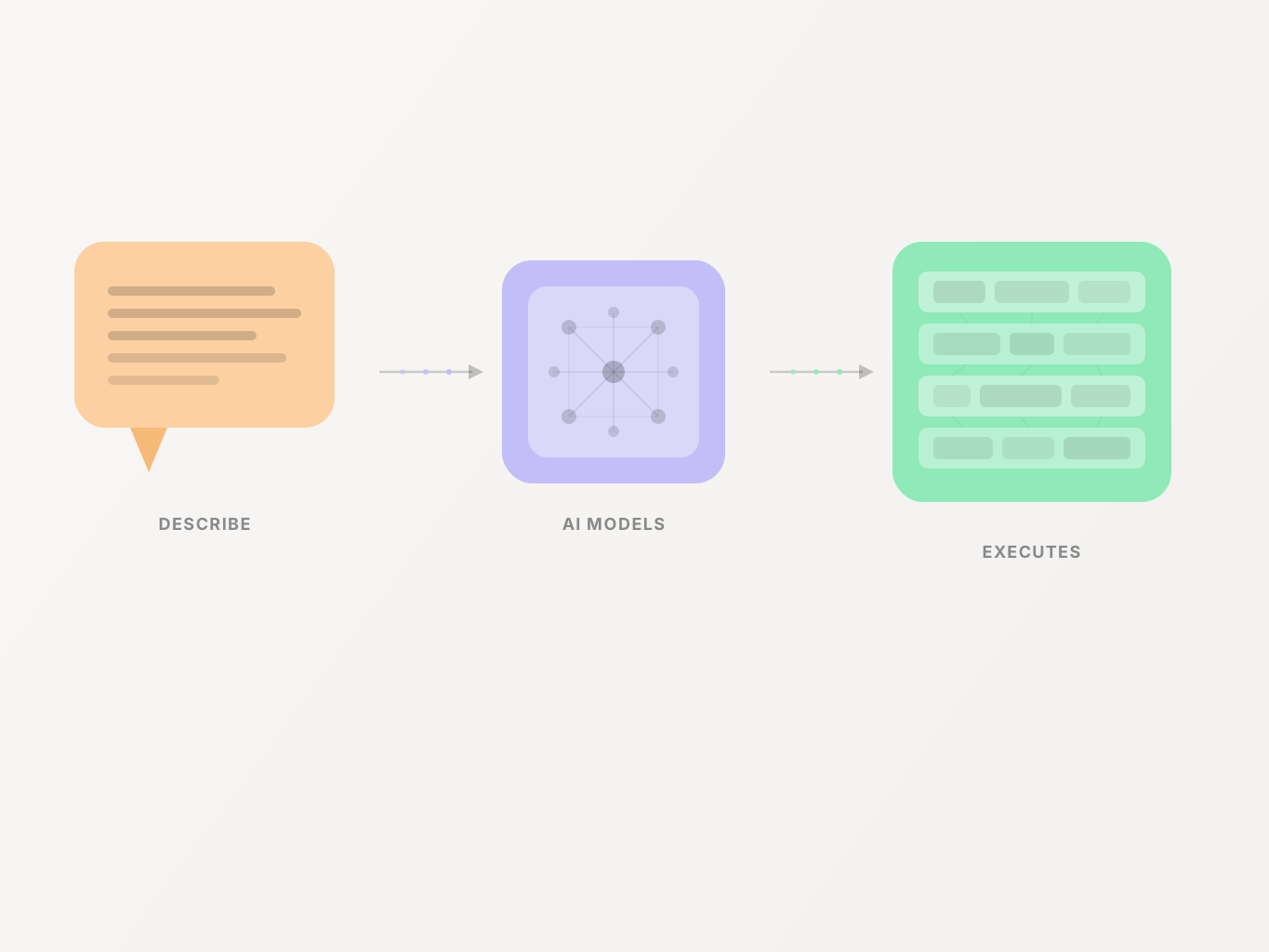
When the heavy equipment dealer configuration was described to viax in plain language, it went directly into the execution layer as a governed model — not as a prompt, not as a specification, not as a development ticket. viax AI turned the intent into a structured set of explicit rules: four segments, regional pricing tiers, a $250k fleet approval threshold, guided selling logic for complex configurations. The model didn’t approximate the motion. It defined it — in terms the execution layer could enforce from the first run.
This is the architectural shift that matters to the CIO. The natural language was the interface. viax was where the execution lived. AI modeled the motion; the model itself — the segments, the constraint rules, the pricing logic — became a deterministic artifact inside the governed execution layer. Not inside a prompt. Not inside a fine-tuned model. Inside viax, where it could be audited, changed, and extended without touching ERP.
What the model actually is
A governed execution model in viax has three properties that matter architecturally: it is deterministic, it is auditable, and it is structured.
Deterministic means the same input produces the same governed output, every time. There is no probabilistic behaviour in the execution path. AI modeled the motion; the execution of that motion runs on explicit rules, not inference. For a CIO building revenue execution that must work consistently across a dealer network, across regions, across multiple ERPs, this is the property that makes the architecture trustworthy enough to scale.
Auditable means every execution is traceable to the rules that produced it. When a $280k fleet order triggers the approval workflow, the system can explain exactly why — the threshold rule, the customer segment, the pricing tier that applied. Governance is not retrospective. It was built into the model from the first description. Compliance does not need to reconstruct intent from logs; the intent is the model.
Structured means the model is real business logic that AI can learn from, reason across, and extend. The same model built from a natural language description on day one is the model an agent can act on in month three. No retro-fit required. No prompt engineering over brittle data. The architecture is AI-ready from the moment the motion is described — not because AI was bolted on, but because a governed, deterministic model is exactly the substrate AI needs to act reliably.
Execution from day one
Once the model was live, two things happened without a front-end build. The governed dealer portal generated from the model’s rules — the guided selling flow, the regional pricing display, the approval routing above the fleet threshold. And the execution was AI-ready immediately: the same deterministic, auditable structure that governed human interactions in the portal was the structure an agent could participate in, act within, and explain to an auditor.
The ERP never saw the motion. It recorded the outcome — the governed order that flowed through viax after the dealer configured, priced, and submitted. The system of record stayed clean. The execution ran in the layer built for it. The CIO’s team did not have to embark on a massive integration project.
The motion that took the commercial team an afternoon to describe was live in days. Not because the team moved faster. Because execution finally had a layer that could receive intent directly.
The pattern here is not specific to heavy equipment dealers or fleet pricing. It applies to any motion a commercial team can describe precisely: a subscription amendment workflow, a post-acquisition pricing harmonization, a channel rebate structure. The capability — natural language to governed, deterministic execution — is architectural, not a feature. The business describes the motion; viax models it; the execution layer runs it from intent to cash. viax is the governed execution layer that models and runs any revenue motion, from business intent to cash, independently of ERP.