
Most revenue motion delivery engagements follow the same arc. The client defines a motion — a new bundled offer, a usage-based tier, a partner compensation model. The systems inventory follows: Salesforce for the relationship, SAP for the record, a billing platform or finance system for settlement. And then the real scope of the engagement comes into focus. Nobody owns execution. That gap becomes the project.
What delivery teams are actually building
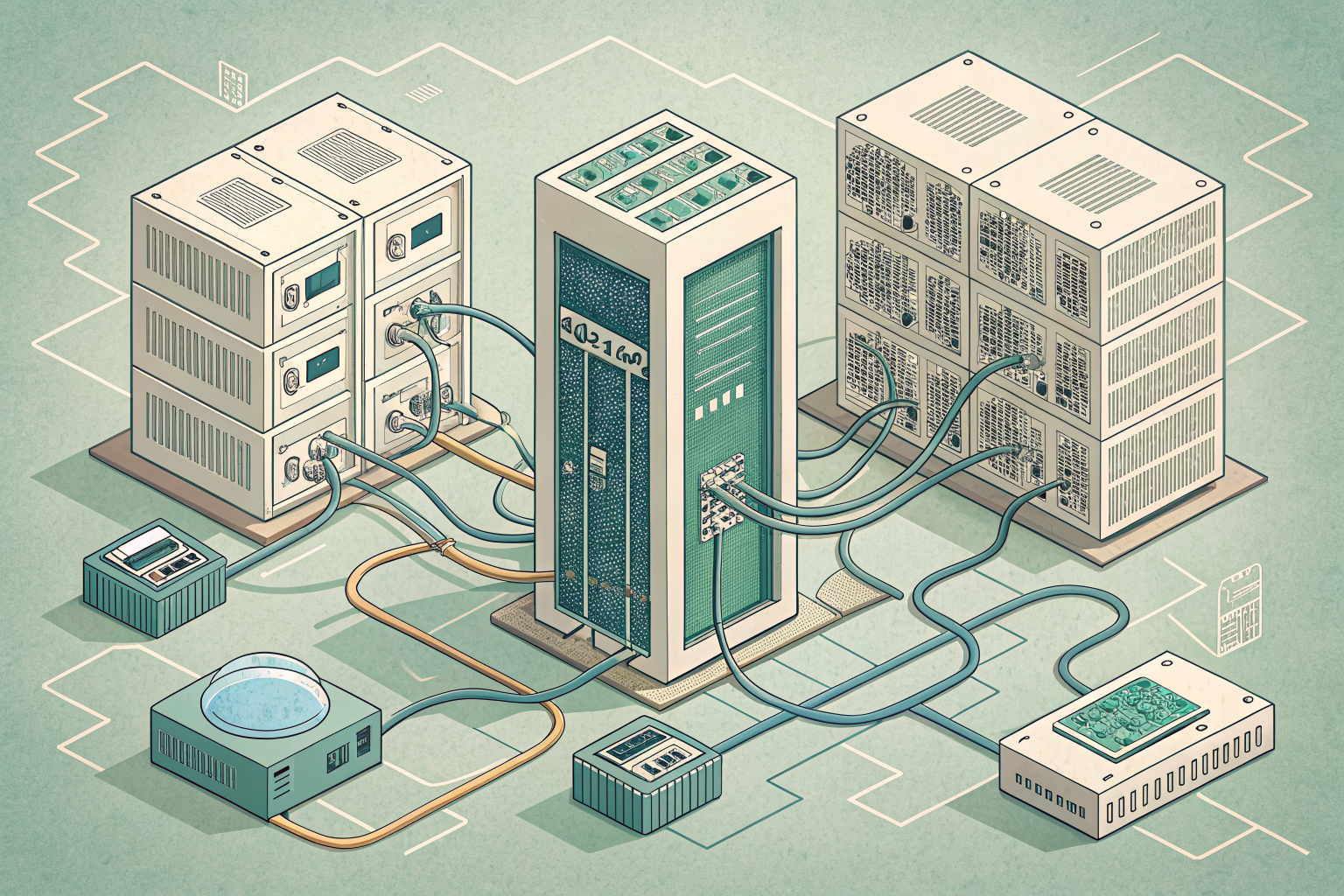
The work that consumes most of a revenue motion engagement is not the motion itself. It is the wiring that connects the systems that surround it. Data mapping between CRM and ERP. Custom connectors to billing. Logic that handles entitlement changes, renewal triggers, and credit processing — each of which falls between systems that were never designed to coordinate on it. This wiring isn’t documented anywhere. It doesn’t live in a product. It lives in the consultant’s code, in middleware configurations, in custom fields that multiply across systems over time.
By the time a motion is live, the integration layer built to support it is often more complex than the motion itself. And it is fragile. Every business decision — a pricing change, a new entitlement condition, a partner tier adjustment — requires re-evaluating the integration logic to determine what breaks.
Why the timeline keeps extending
Revenue Motions change. That is not a failure of planning — it is the nature of enterprise revenue. What becomes a delivery problem is that every change to a motion routes through the integration layer. A pricing adjustment that takes a business analyst two hours to specify takes a delivery team two months to implement, because the change touches three systems, each with its own data model, its own release cycle, and its own risk profile.
This is the blast radius dynamic. Small business decisions create large technical programs. The systems weren’t built to absorb revenue change quickly. They were built to record it accurately. The execution logic that sits between them was never designed to change fast, because it was never designed at all. It accumulated.
What changes when execution has a layer
The governed execution layer that models and runs any revenue motion — from intent to cash — independently of ERP. For delivery teams, that sentence has a specific and practical meaning: the integration work that normally defines the engagement is already done.
viax arrives with connectors to Salesforce, SAP, and finance systems built in. It holds the execution logic for pricing, entitlement, billing, and settlement in a single governed model — not distributed across custom integrations. When a delivery team configures a Revenue Motion in viax, they are specifying what the motion does and how it behaves. They are not building the plumbing that carries it across systems.
This changes the scope of the engagement materially. A motion that would have required three months of integration work to connect CRM and ERP can be configured, tested, and live in a fraction of that time. The logic is explicit, auditable, and held in one place — not spread across middleware, custom objects, and system-specific configurations.
What a delivery engagement actually looks like
Before viax, a revenue motion engagement typically involves a discovery phase to map the motion, a design phase to decide how to connect the systems, and an implementation phase dominated by integration work. The final weeks are testing and defect resolution — most of which traces back to edge cases in the integration layer.
With viax, discovery still happens. The motion still needs to be defined precisely. But the design phase shifts from “how do we connect these systems” to “how do we model this motion in the execution layer.” Implementation becomes configuration — Revenue Motion templates, pricing rules, entitlement conditions, billing triggers — not custom code. Testing validates motion behaviour, not integration wiring. Handoff to the client is documentation of the motion model, not a maintenance manual for custom integrations nobody fully understands.
The engagement is faster. It is also more transferable. When the business needs to change the motion, the change happens in viax — not in a network of integrations that require the original delivery team to navigate.
The shift in what delivery teams own
The most durable change is not speed — it is what the work becomes. Delivery teams that work with viax are configuring revenue logic, not building integration infrastructure. The skills that matter are motion design, business rule modelling, and execution governance — not middleware architecture and API debugging.
That shift matters for the client relationship as well. A delivery team that hands off a Revenue Motion in viax is handing off something the client can manage. The motion is visible, modifiable, and governed. When the business evolves — and it will — the client has a layer they can reach. They do not have a black box of custom integrations that only the original delivery team can explain.
This is what it looks like when execution has a dedicated layer. The delivery engagement changes shape. The work that shouldn’t have existed — building the plumbing between systems that don’t natively coordinate — stops being the project. The motion becomes the project.